


Termite Identification
Eastern Subterranean Termites: Identification, Signs and Control
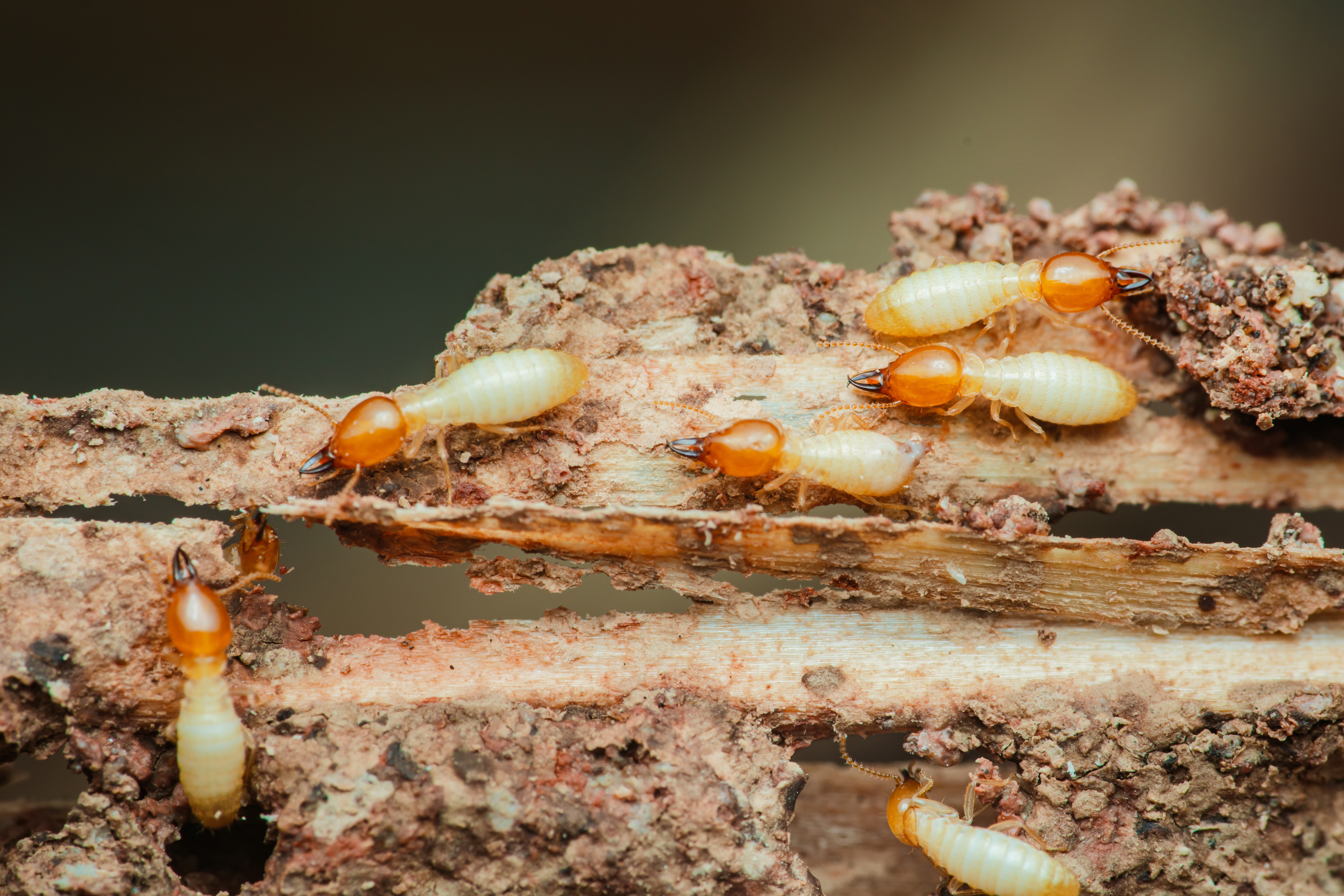
Eastern subterranean termites (Reticulitermes flavipes) are the most widely distributed termite species in North America and the termite property owners are most likely to encounter in North Texas. Unlike Formosan termites, they must maintain contact with soil moisture to survive, which is why mud tubes are one of the clearest signs of activity.
Licensed Texas Pest Control Company · TPCL #0965990
Subterranean termite activity often stays hidden behind walls, trim, and flooring until damage is already underway. Slade Pest Solutions provides professional termite control that inspects for mud tubes, moisture conditions, and wood-to-soil contact around the property.
Quick Identification
How to Identify Eastern Subterranean Termites
Eastern subterranean termites can be hard to tell apart from Formosan termites without a closer look. Soldier head shape and swarmer timing are the most reliable field clues.
- Scientific name
- Reticulitermes flavipes
- Worker/soldier size
- About 1/8 inch long; creamy white to pale
- Swarmer size
- About 3/8 inch long, with dark brown to black wings
- Key ID trait
- Soldiers have a rectangular, pale head with dark mandibles and rarely bite when disturbed
- Swarm behavior
- Swarms during the day, typically in spring
- Colony size
- Typically tens of thousands of workers, generally smaller than large Formosan colonies
Don't Misidentify
Eastern Subterranean Termites vs. Formosan Termites
Both species are active in North Texas, but they behave differently enough that the distinction affects how a property should be inspected and treated.
| Trait | Eastern Subterranean Termite | Formosan Termite |
|---|---|---|
| Swarmer wings | Dark brown to black | Pale, translucent |
| Swarm timing | Daytime, spring | Night, late spring through summer, drawn to lights |
| Soldier head | Rectangular, pale, rarely bites | Oval, orange-brown, bites aggressively |
| Colony size | Typically tens of thousands | Often 1 million+ |
| Nesting habit | Soil-bound; needs mud tubes to reach wood above ground | Soil colonies plus aerial "carton" nests above ground |
| Feeding rate | Slower, more limited diet | Faster, wider range of cellulose material |
Species identification matters because Formosan activity may require checking above-ground areas that a subterranean termite inspection would not typically prioritize.
Seeing large night swarms near lights or unusually fast damage? Learn more about Formosan termites .
Nesting & Moisture
Where Eastern Subterranean Termites Live
Eastern subterranean termites rarely establish colonies away from soil contact, which shapes both where they nest and how they reach wood above ground.
Underground Colonies
The primary colony lives in the soil, often near a structure's foundation, where moisture and food sources are close together.
Mud Tubes to Reach Wood
To travel from soil to wood above ground, workers build mud tubes out of soil, saliva, and waste that shield them from open air and predators.
Moisture-Prone Areas
Leaky plumbing, poor drainage, and damp crawl spaces can create conditions that make wood-to-soil contact more likely around the structure.
Scope of the Problem
Why Eastern Subterranean Termites Are the Most Common Termite Threat
Widest Distribution
Reticulitermes species are found throughout Texas and in nearly every U.S. state, making them the termite property owners are most likely to encounter.
Billions in Damage Annually
Subterranean termites are considered the most destructive insect pest of wood in the United States, largely due to how broadly they're distributed.
Hidden Behind Walls
Activity is often not readily noticed because it stays hidden behind wallboards, siding, or wood trim until damage is already visible.
Signs of Activity
Signs You May Have Subterranean Termite Activity
- Mud tubes on foundations, exterior walls, garages, or crawl spaces.
- Winged swarmers appearing indoors or near windows and lights during the day in spring.
- Discarded wings near windowsills, doors, or baseboards after a swarm.
- Hollow or soft-sounding wood, damaged trim, or baseboards.
- Bubbling paint or tight-fitting doors and windows with no obvious cause.
- Wood-to-soil contact around fence posts, deck supports, or stored firewood near the structure.
Behavior
Why Do Subterranean Termites Build Mud Tubes?
Eastern subterranean termites need to stay close to soil moisture to survive, so any time workers travel from the soil to a wood source above ground, they build a mud tube out of soil, saliva, and fecal matter to protect themselves from open air, light, and predators along the way.
Because mud tubes are visible on foundations, slab edges, and exterior walls, they're one of the clearest signs an inspector can check without needing full attic or wall access. Breaking open a small section of a mud tube to look for live termites inside is a standard part of confirming active infestation.
Why It Matters
Why Subterranean Termite Activity Should Be Addressed
Subterranean termite damage tends to progress gradually, but because activity is so easily hidden, it can go unnoticed for years before it's discovered.
Structural Damage Over Time
Continuous feeding behind walls, trim, and flooring can cause serious structural damage the longer it goes undetected.
Detection Difficulty
Activity hidden behind wallboards, siding, or wood trim often isn't noticed until visible damage or a swarm appears.
Repair & Insurance Costs
Termite damage is typically excluded from standard homeowners insurance, which makes early detection the main way to limit repair costs.
Prevention
Reducing Conditions That Support Subterranean Termites
- Keep firewood, lumber, mulch, and wood debris away from the foundation.
- Fix plumbing leaks and reduce standing water near the foundation.
- Maintain a gap between soil and wood siding, trim, or deck posts.
- Direct gutters and downspouts away from the structure.
- Avoid heavy mulch buildup directly against exterior walls.
- Schedule regular termite inspections to catch mud tube activity early.
Our Approach
How Slade Pest Solutions Handles Subterranean Termites
Subterranean termite control starts with inspecting foundations, slab edges, garages, and moisture-prone areas for mud tubes and other signs of activity. Slade Pest Solutions checks wood-to-soil contact points and conducive conditions before recommending a treatment path.
Depending on the inspection findings, treatment may include Trelona bait stations, Termidor barrier treatment, or a targeted spot treatment. Slade also explains moisture, drainage, and landscaping conditions that may be contributing to the risk.
See Full Termite Control ServiceReferences
Subterranean Termite Identification Sources
Slade Pest Solutions combines field experience with trusted university resources when reviewing termite identification, biology, and pest-management information.
Questions
Subterranean Termite FAQs
What are Eastern subterranean termites?
Eastern subterranean termites (Reticulitermes flavipes) are the most widely distributed termite species in North America. They live in soil-based colonies and must maintain contact with soil moisture to survive.
How can I tell subterranean termites apart from Formosan termites?
Subterranean swarmers have dark wings and swarm during the day in spring, while Formosan swarmers have pale wings and swarm at night. Subterranean soldiers have a rectangular head and rarely bite; Formosan soldiers have an oval, orange-brown head and bite aggressively.
Why do subterranean termites build mud tubes?
Subterranean termites need soil moisture to survive, so workers build mud tubes out of soil, saliva, and waste to protect themselves whenever they travel from the soil to a wood source above ground.
How much damage can subterranean termites cause?
Subterranean termites are considered the most destructive insect pests of wood in the United States, largely because of how widely distributed they are. Damage tends to progress gradually but can go unnoticed for years since activity is often hidden behind walls, siding, or trim.
When do subterranean termites swarm in North Texas?
Eastern subterranean termites typically swarm during the day in spring, unlike Formosan termites, which swarm at night during late spring through summer.
How does Slade Pest Solutions treat subterranean termites?
Slade inspects foundations, slab edges, garages, and moisture-prone areas for mud tubes and other signs of activity, then recommends a treatment path that may include Trelona bait stations, Termidor barrier treatment, or a targeted spot treatment.
Get Help
Suspect Subterranean Termite Activity?
Slade Pest Solutions can inspect the property for mud tubes, moisture conditions, and wood-to-soil contact, then recommend a treatment plan based on what's found.